📝 Product Description
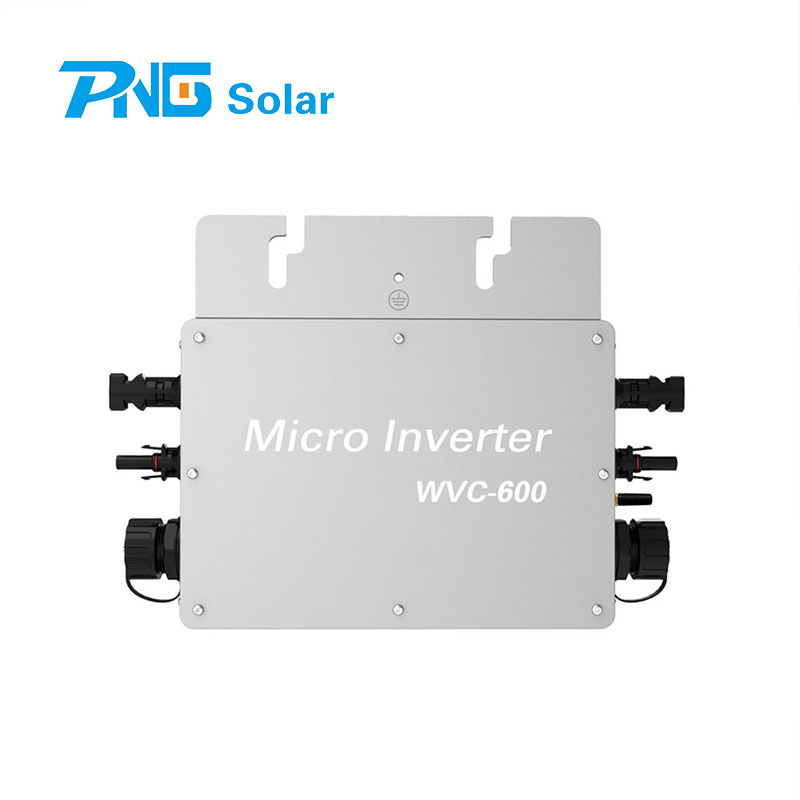
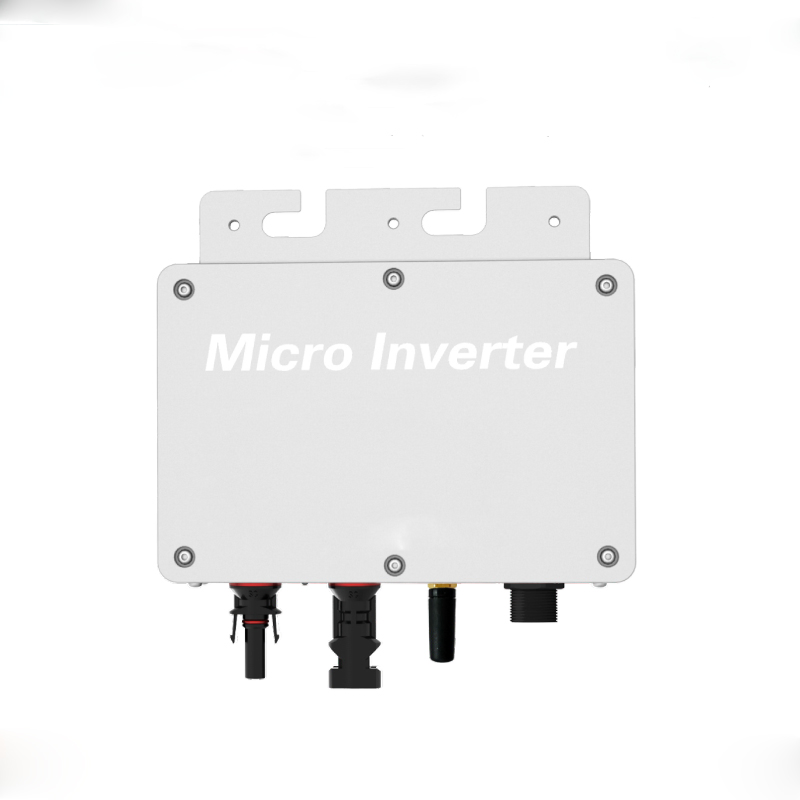
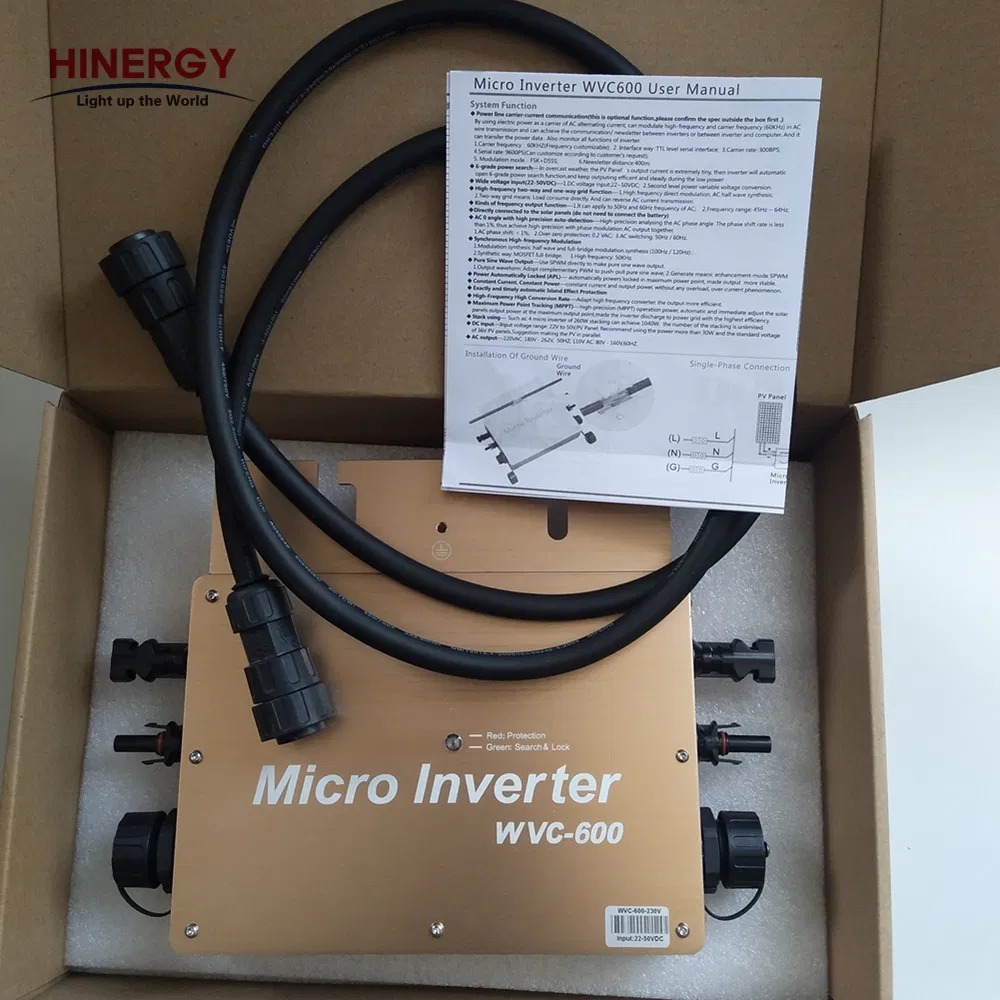
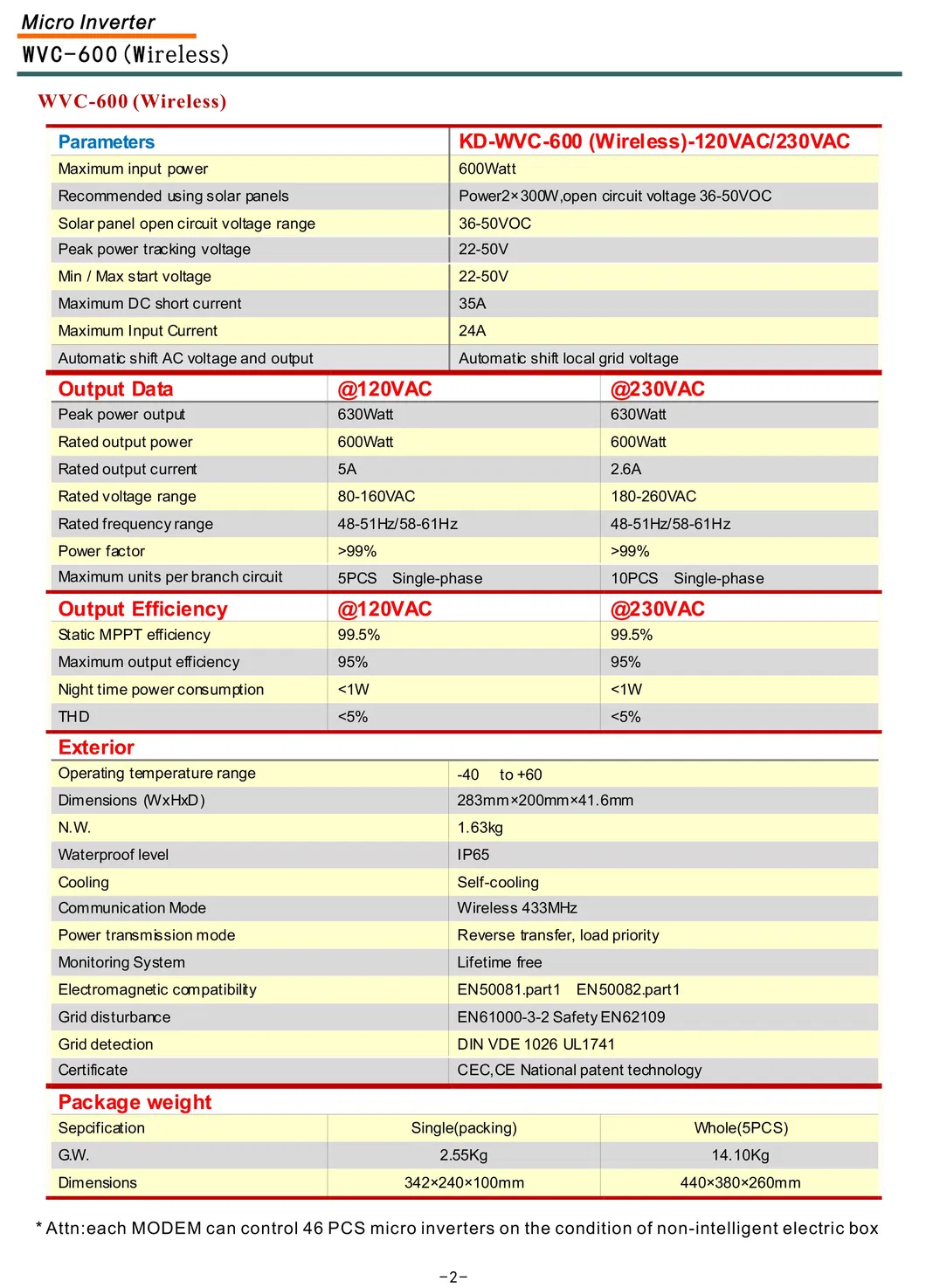
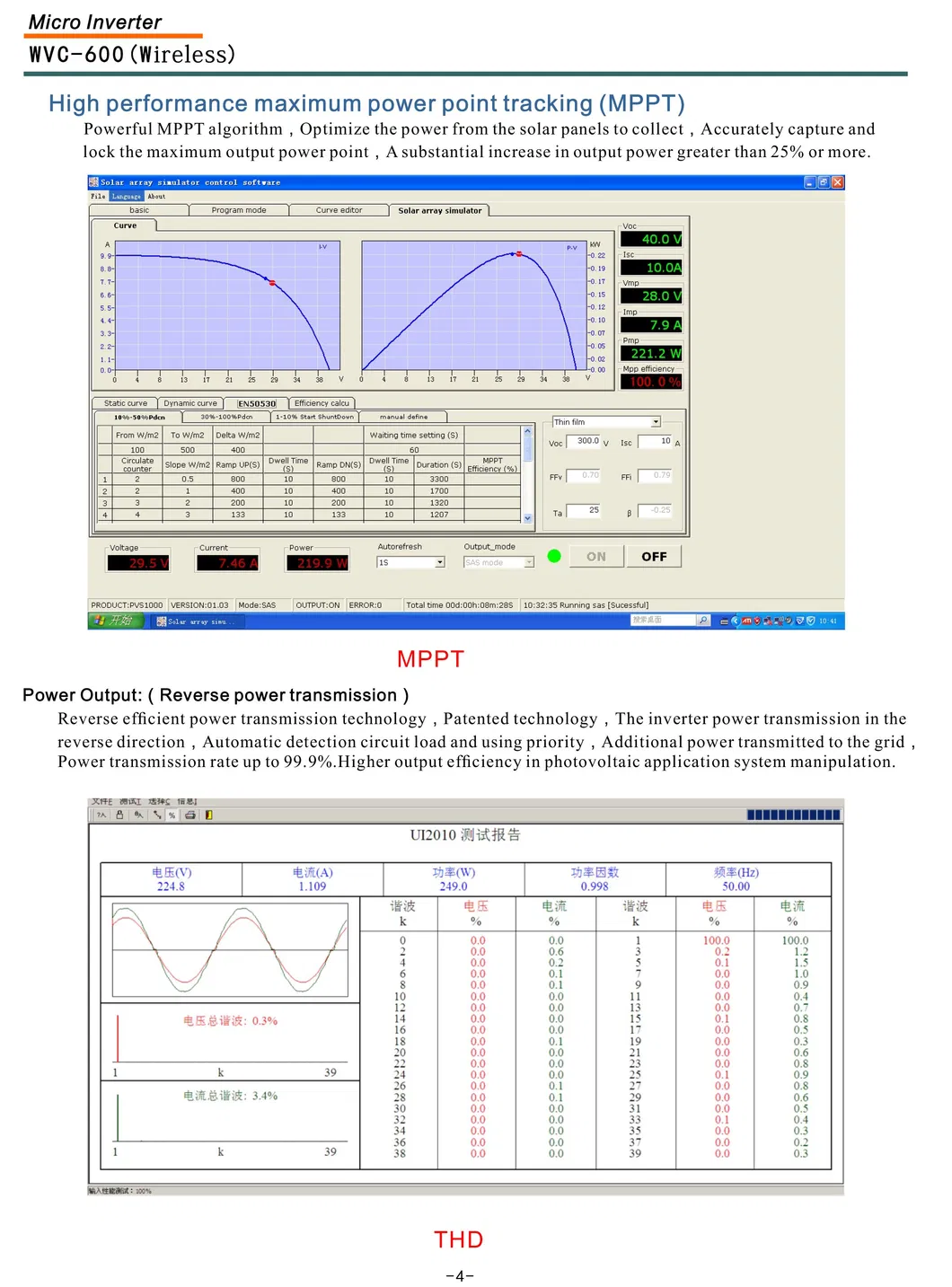
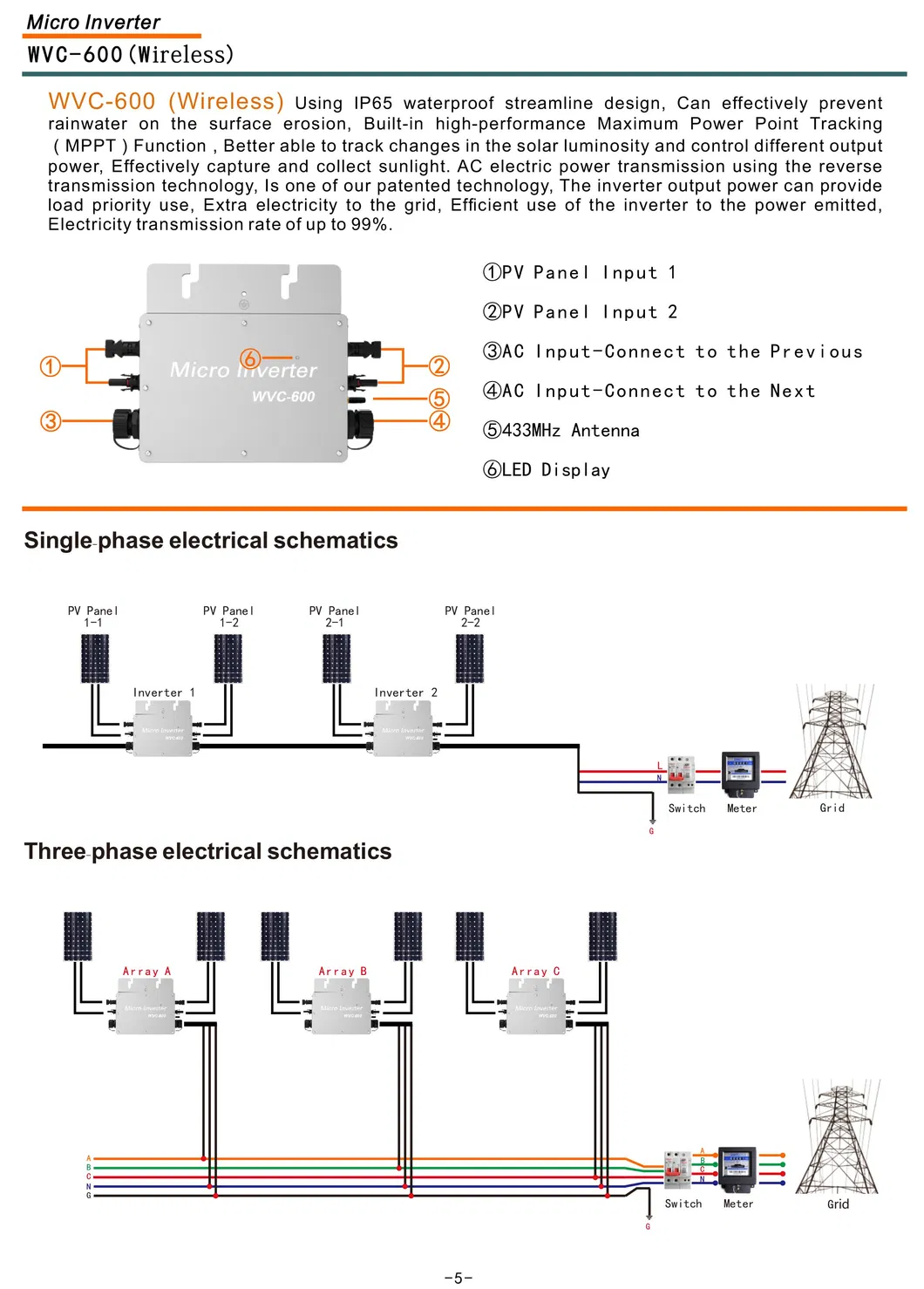
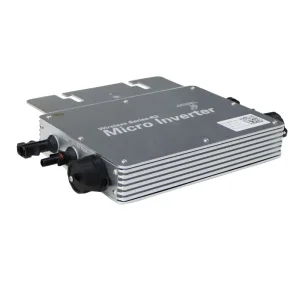
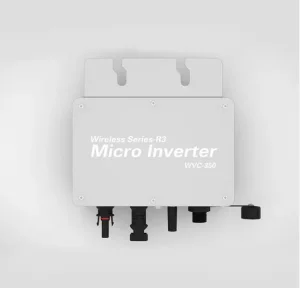
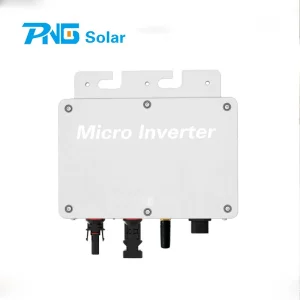
WVC-600 (Wireless) utilizes an IP65 waterproof streamline design, effectively preventing rainwater erosion on the surface. It features a built-in high-performance Maximum Power Point Tracking (MPPT) function, which tracks changes in solar luminosity and controls different output power levels to capture and collect sunlight efficiently.
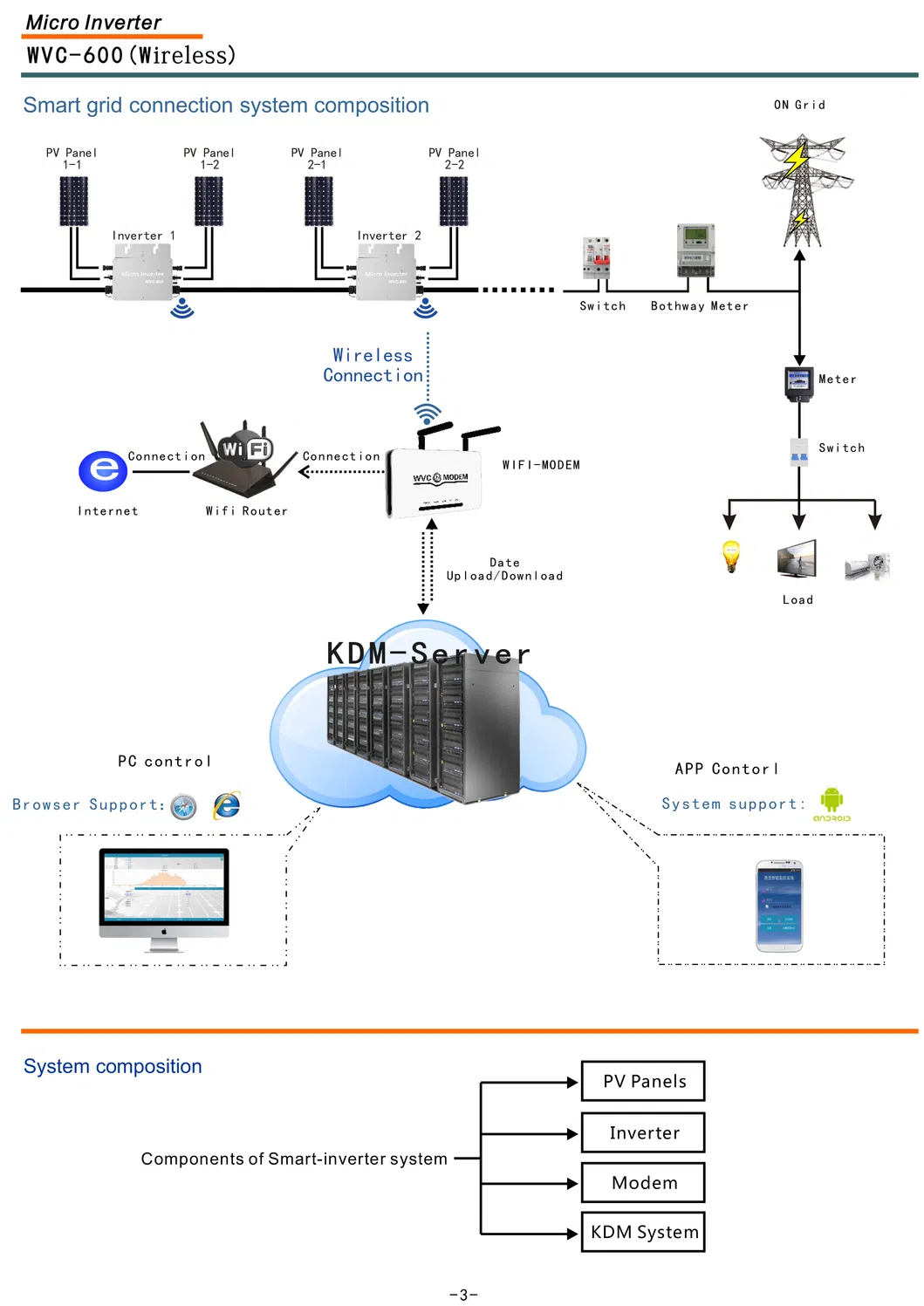
The AC electric power transmission uses reverse transmission technology, a patented innovation where the inverter output power provides load priority use, sending extra electricity to the grid. The electricity transmission rate reaches up to 99%. Communication is handled via two modes: power line carrier signals between the inverter and collector, and RS232/WIFI between the collector and PC/devices.
Key Advantages
- High performance MPPT tracking
- Reverse power transmission
- Intelligent monitoring management
- Fully isolated input/output for safety
- Multiple parallel stacking support
- Digital control system
- Simplified maintenance
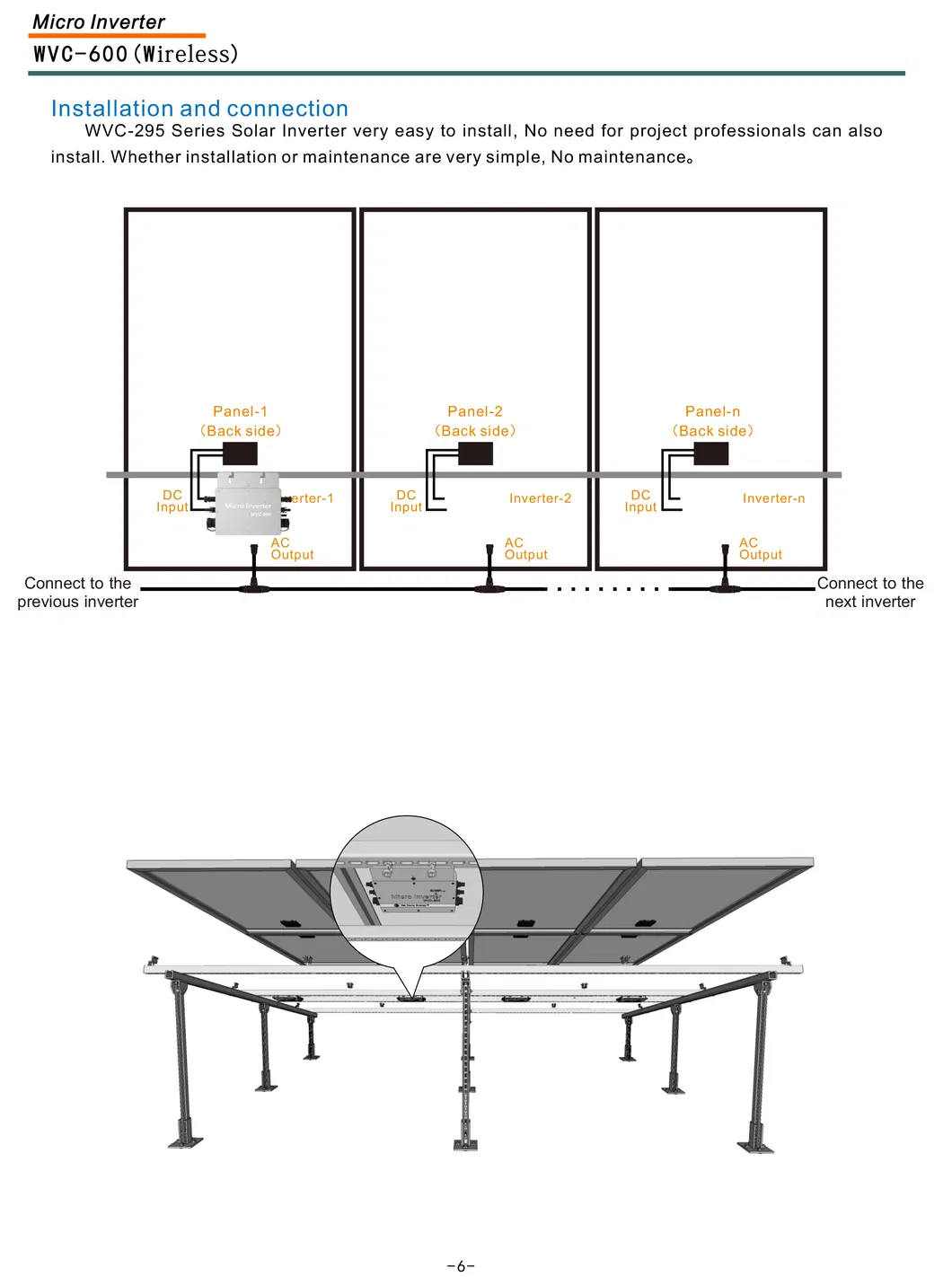
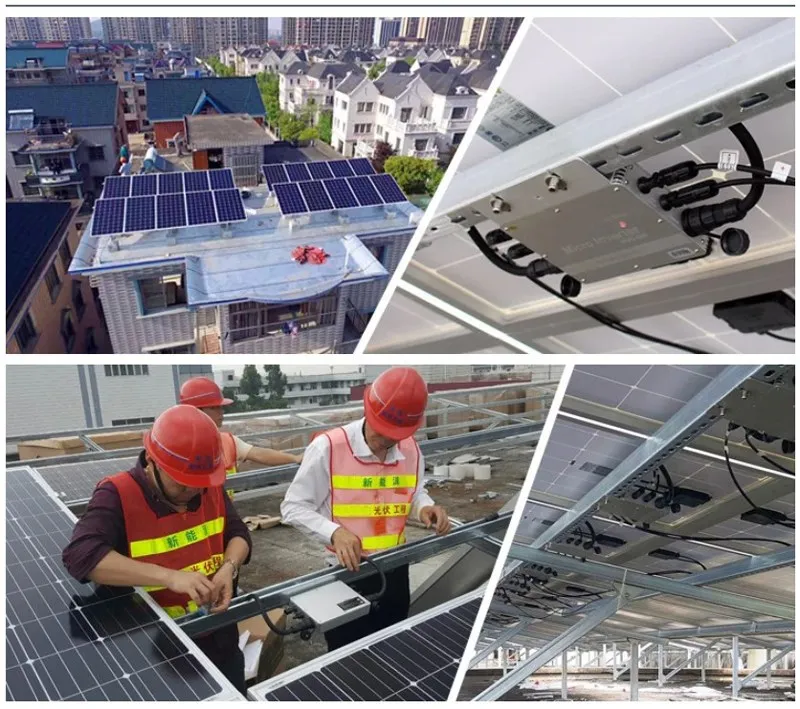
- Flexible installation
❓ Frequently Asked Questions
1. What is the efficiency of the WVC-600 inverter?
The inverter features a high-performance MPPT system and reverse power transmission technology, achieving an electricity transmission rate of up to 99%.
2. Can the inverter be installed outdoors?
Yes, it is designed with an IP65 waterproof rating, which effectively prevents erosion from rainwater and makes it suitable for outdoor environments.
3. How does the intelligent monitoring system work?
The inverter uses 433MHz or WiFi wireless communication to collect real-time data, allowing users to control startup, shutdown, and power regulation remotely.
4. What is meant by "Reverse Power Transmission"?
This technology ensures that the solar power generated is prioritized for local load use, while any excess electricity is automatically fed back into the grid.
5. Is it possible to expand the system later?
Absolutely. The WVC-600 supports multiple parallel stacking, allowing you to add more units to increase your total power output as needed.
6. What kind of maintenance does the unit require?
The system is designed for low maintenance with digital control and high-quality components. It includes features that make it user-serviceable to keep operation costs low.
 Yde Power